Nobody gets excited about a power supply — until a cheap one dies and takes the motherboard, drives and graphics card with it. The PSU is the only component wired to every other component, on a national grid famous for its mood swings. It deserves ten minutes of understanding.
How Much Wattage Do You Actually Need?
Add your components' real draw and give yourself headroom:
- Office/mini-tower (no dedicated GPU): 300–450W with change to spare.
- Budget gaming (entry GPU): 550W comfortably covers it — our R15,000 build budgets exactly this.
- Mainstream gaming (mid-range GPU): 650W is the modern default.
- Enthusiast (upper GPU tiers): 750–850W.
- Flagship everything: 1000W+, dictated by the GPU vendor's own spec sheet.
Two reasons not to size exactly: PSUs run quietest and most efficient at 40–60% load, and headroom means your next GPU upgrade does not require a new PSU.
80 Plus Ratings: Efficiency, Not Quality
Bronze, Gold, Platinum measure electrical efficiency — how little power is wasted as heat — not build quality. A reputable Bronze unit beats a no-name "Gold" every day. That said, the brands that bother with Gold certification usually build better internals, so the correlation exists. Sweet spot for most builds: a quality Bronze or Gold 550–750W from a recognised brand.
The South African Multiplier
Load shedding is not just outages — it is the surges, brown-outs and voltage wobble around every switch event, several times a day. This is precisely the abuse that separates real PSUs (proper protection circuits: OVP, UVP, OCP, SCP) from shelf-fillers. Pair the PSU with a UPS or at minimum a surge-protected plug — our UPS guide explains why the pair matters more here than anywhere.
Modular, Semi, or Fixed Cables?
Fully modular (every cable detaches) makes building tidier and airflow better; semi-modular fixes only the cables every build needs anyway and saves money. Non-modular is fine in a case with room to stash the spaghetti. It is a convenience spectrum, not a quality one.
The New GPU Connector Era
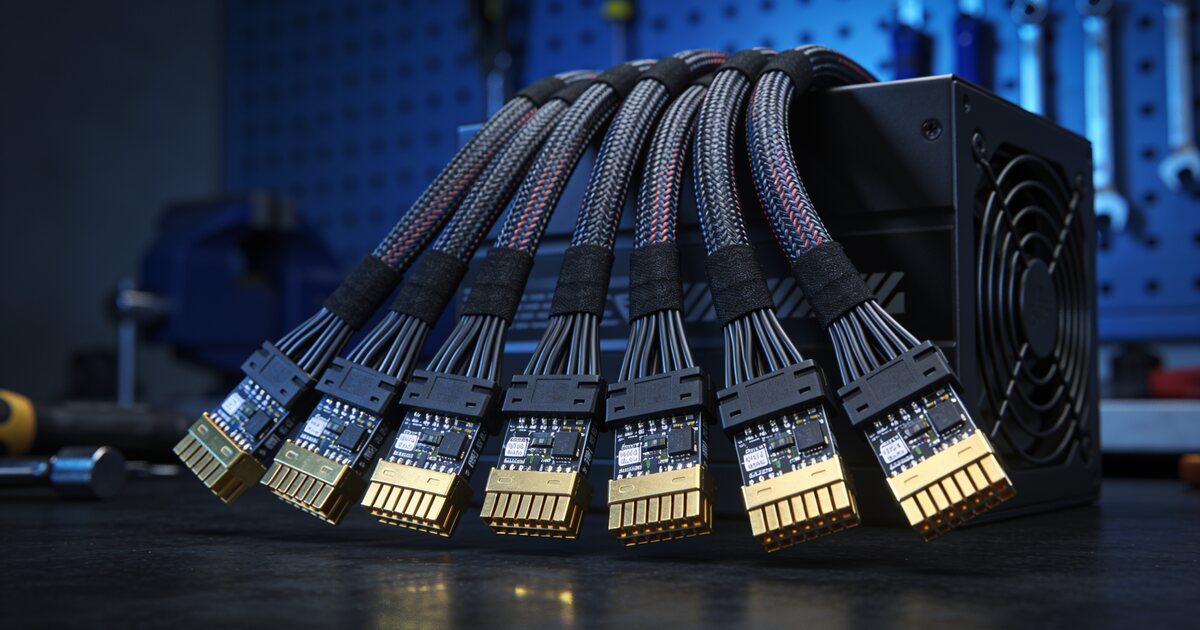
Modern high-end graphics cards use the 12V-2x6/16-pin connector. If you are buying a PSU today with big GPU ambitions, get one with the connector native (ATX 3.x class units) rather than living on adapters. Mid-range cards remain happily on classic 8-pin PCIe plugs.
When to Replace an Old PSU
PSUs age — capacitors dry out and peak capacity fades. A quality unit is good for 7–10 years; a budget one, half that. Reusing a decade-old mystery PSU for a shiny new build is a false saving of the highest order. Browse current PSU stock by wattage and rating.
Frequently Asked Questions
Can a PSU be too big for my PC?
Electrically, no — components draw what they need. A hugely oversized unit just costs more and sits below its efficiency sweet spot. Moderate headroom is ideal; double is pointless.
What happens if my PSU is too weak?
Best case: shutdowns and restarts under gaming load as protections trip. Worst case with cheap units lacking protections: component damage. Persistent crashes under load are a classic undersized-or-dying-PSU symptom.
Is it safe to buy a used power supply?
It is the component we least recommend used — age is invisible, abuse leaves no external marks, and its failure mode can be catastrophic to everything else. Buy this one new, from a brand, with a warranty.
Do 80 Plus ratings save real money on electricity?
Modestly — a Gold unit might save a few hundred rand a year over a Bronze on a heavily used gaming PC at SA tariffs. Buy Gold for the build quality correlation and quieter running; the electricity saving is the bonus.